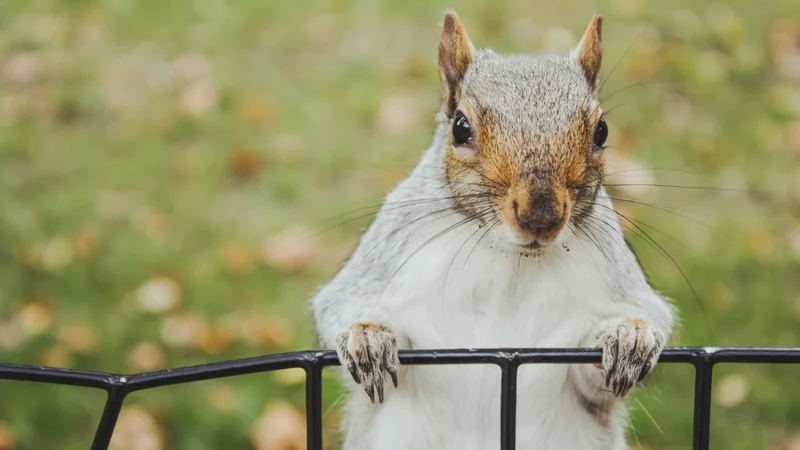
What is critter-guard, and should I have it installed?
Critter-guard keeps squirrels and pigeons from nesting under solar panels in Virginia homes. Learn when it's needed and how to fix existing critter damage.


Let's put solar on your home — we've been designing and installing residential solar in Virginia since 2015.



Our goal is to make getting solar on your home easy. Here you'll find answers to your questions about going solar in Virginia, as well as a form to get a free solar quote.
Our company has been in installing solar on Virginia homes for over ten years, and has one of the most experienced solar teams in the state.
We handle every step of the process, from sales, to design, to installation. We are solar installers, not solar salesmen. If you're looking for honest advice and professional design for your solar power project, we are here to help.
Let's jump in!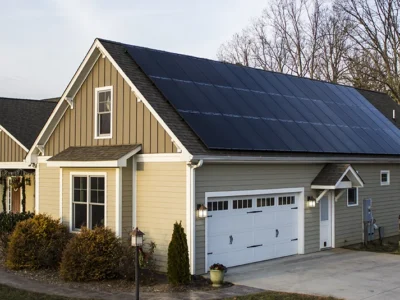
Solar lets you lock in predictable energy costs and protect your household from rising utility rates. With Virginia electricity prices climbing year after year, generating your own power is one of the smartest investments you can make.
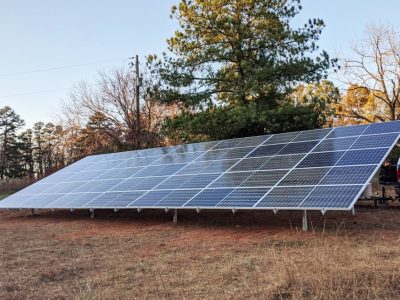
Most homeowners spend $1000 - $2000 a year on electric bills. Solar can reduce this to almost nothing, in addition to powering your home with clean, renewable energy.
Studies also show that solar makes it easier to resell your home for a premium.
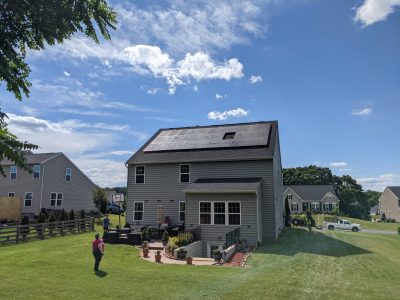
By going solar, you reduce your reliance on fossil fuels and lower your carbon footprint--without changing a single habit.
Unlike utility-scale power plants, rooftop solar generates electricity without emissions, waste, or water use. It's a simple way to make a long-term difference while keeping more money in your pocket.
Modern solar panels offset their embodied energy in about a year and are warrantied to produce for 25.
Solar might seem like magic — but it's actually pretty straightforward. From the sunlight on your roof to the credit on your utility bill, here's the four-step path your power takes.
When sunlight hits your solar panels, they generate direct current (DC) electricity.
An inverter turns that DC into usable AC electricity, feeding your appliances, lights, and everything else straight into your home.
Produce more than you use and the surplus flows back to the utility for credits — a system called net metering.
In Virginia it's a 1:1 exchange — every kWh you send out earns a full kWh credit to use after dark.
That 1:1 credit is what makes net metering in Virginia so valuable — nothing you generate goes to waste.
Learn more about net meteringChoosing the right inverter is, in our experience, even more important than the panels. Inverters cause most serious failures — so reliability is king here.
For ground-mounted systems, we typically recommend string inverters from Fronius or SMA. They're cost-effective, efficient, and have a long track record of reliability. Since ground-mounted arrays should be located in full sun, string inverters typically produce just as much as a system with microinverters would.
For roof-mounted systems, we strongly recommend Enphase microinverters. Unlike string inverters that wire every panel together, microinverters work independently on each panel — improving performance in shade and cutting the risk of system-wide failures.
If your system is grid-tied (like most residential solar systems), it will shut off during an outage for safety reasons. However, if you want backup power, a battery-backup system can keep essential appliances running when the grid goes down.
Whether it's keeping the lights on during a storm or powering critical medical equipment, a solar + battery backup system gives you energy security and peace of mind.
If backup power is a priority, we offer free site visits to assess your home's electric needs, so we can design the right backup solution for your home.
Learn more about how solar works in a power outage
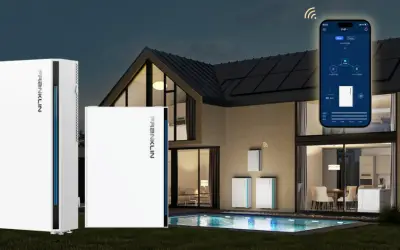
Adding battery storage to your residential solar system provides reliable backup power during outages, keeping essential appliances running even when the grid goes down.
Unlike generators, batteries are silent, require no fuel, and recharge automatically from your solar panels. With increasing grid instability and power outages, battery storage offers peace of mind and energy independence for Virginia homeowners.
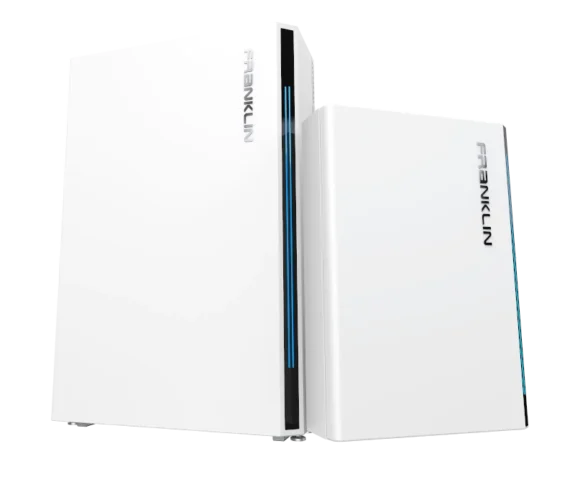
We install Enphase IQ Batteries and FranklinWH batteries, which offer seamless backup power, smart energy management, and reliable performance. These batteries store excess solar energy for later use, allowing homeowners to reduce grid reliance and maximize savings.
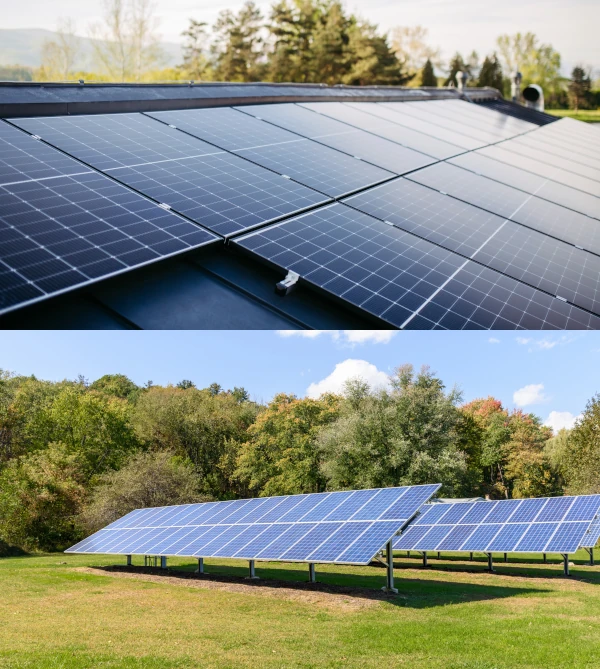
We install both roof-mounted and ground-mounted solar systems, giving homeowners flexibility based on their property and energy goals.
Roof-mounted solar panels are the most common choice offering a lower upfront cost and efficient use of space, especially for homes with a good south-facing roof.
However, if your roof isn't ideal due to shading, age, or space constraints, a ground-mounted system can be a great alternative. These systems often perform better because they can be positioned at the perfect angle and kept free from obstructions. While they require more space and a higher upfront investment, they're easier to maintain over time.
We'll create a custom model of your home, and show you how solar looks, what it will cost, and what solar incentives are available.
a quick comparison of
| Feature | Roof-Mounted Solar | Ground-Mounted Solar |
|---|---|---|
| Cost | Lower upfront cost | Higher upfront cost |
| Space | Uses existing roof space | Requires open yard space |
| Efficiency | Limited by roof angle | Optimized for best sun exposure |
| Maintenance | Harder to access | Easier to access and maintain |
| Installation Time | Typically faster | Requires more site preparation |
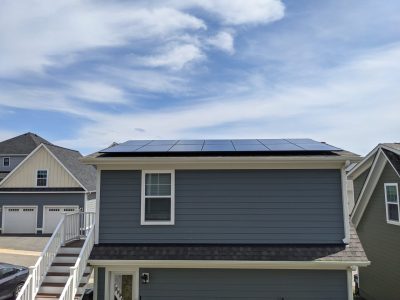
In Virginia, the average cost of a residential solar system (without batteries) ranges from $2.75 to $3.50 per watt before incentives.
That means a typical 8 kW system might cost between $22,000 and $28,000 before incentives, while a larger 12 kW system could be in the $33,000 to $42,000 range.
But here's the good news--incentives can significantly reduce your net costs.
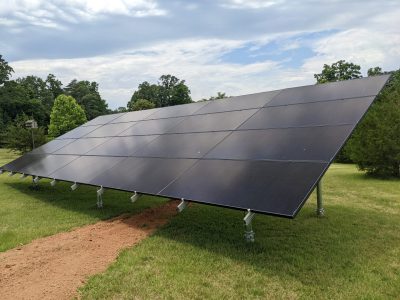
The residential solar tax credit for homeowners ended on December 31, 2025--but that doesn't mean solar is out of reach. Through third-party ownership (TPO), homeowners can go solar with no upfront cost.
We install & maintain the system, and you pay the third-party a flat-monthly rate--typically much less than what you'd pay the utility. You can lock in a predictable rate, get guaranteed energy production, with no service or maintenance costs.
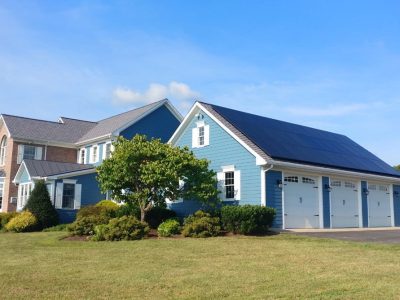
Homeowners in Virginia can earn extra income through Solar Renewable Energy Credits (SRECs).
For every 1,000 kilowatt-hours (kWh) your solar system produces, you earn 1 SREC, which can then be sold on the market. SRECs in Virginia are selling for about $32 each in 2025--which can add up quickly.
For a typical 10 kW solar system, you might generate 12-14 SRECs per year, translating to an extra $384 to $448 annually--essentially another 20% in savings on top of your reduced electricity bill.
Best of all, we handle SREC registration for you, so you can start earning as soon as your system is up and running.

Matt started Virtue Solar in 2015 as a one-man shop with a Subaru Outback and a borrowed trailer. Over the years, Virtue has grown from the smallest company around to one of Virginia's most trusted residential solar installers. Our goal has always been to focus on doing the right thing.
This starts with our employees, by providing full benefits for every team member, profit sharing, and a genuine commitment to keeping our team happy. For our customers, we want to provide the best experience possible. Our reviews and testimonials are a glimpse of how we treat others. If you've read them and thought, "These are too good to be true," they're not. We've made mistakes just like anyone else, but we've addressed them by focusing on doing what's right, and working with our customers to make sure that they are satisfied with the end result.
We truly believe that we offer the highest-quality solar installations in the area, and offer a 30-year warranty to back it up. If you're looking for local solar installers who are passionate about what they do, you've found us.
Modern solar panels are built to last, with most high-quality panels producing power for 30+ years. While efficiency slightly decreases over time, reputable brands maintain over 90% output after 25 years.
Solar panels require minimal maintenance, as they have no moving parts. In most cases, rain naturally cleans the panels, but occasional cleaning or inspections may help maximize performance.
We start with a quick call or email to understand your energy goals. Using your electric usage, LIDAR data, and satellite imagery, we design a custom solar system tailored to your home. Your proposal includes:
The solar quote & proposal are completely free, with no obligation.
If you like the proposal, the next step is an on-site visit. We'll take measurements, answer your questions, and confirm that the system will perform as expected. This step ensures a seamless installation with no surprises.
Once you're ready to move forward, we finalize the design and sign the contract--partnering together to bring clean, affordable energy to your home!
We handle all the red tape, including:
No headaches for you--we take care of it.
Installation typically takes 2-3 days (longer for larger or more complex systems). Our experienced team ensures a clean, professional install, and we coordinate all inspections with the county to ensure compliance.
Before we wrap up, we walk you through the system, showing you exactly how it works. At this stage, we also request Permission to Operate (PTO) from the utility--the final approval before your system goes live.
Once PTO is granted (utilities have up to 30 days in Virginia), it's time to flip the switch and start generating your own clean energy!
We also take care of your SREC registration, so you can earn income from the renewable energy credits your system produces.
And our commitment doesn't end there--we provide free system monitoring, service, and technical support to ensure your system operates at peak performance for years to come.
Critter-guard keeps squirrels and pigeons from nesting under solar panels in Virginia homes. Learn when it's needed and how to fix existing critter damage.
Dominion's virtual power plant pilot is on track to start enrolling Virginia homes around late 2026. Here's how a VPP pays battery owners — and what's still unknown.
Virginia SCC's April 30, 2026 final ruling preserves 1:1 net metering and SRECs for solar. Small admin fee added for new Dominion customers.
“I looked at several solar providers but chose Virtue because they were low pressure, responsive, honest and local.”
“I recommend Virtue, without reservation, as the best of all the local solar companies I've dealt with, by far.”
“Peter and Matt were very helpful in getting my system designed for my needs. I can't stress enough how happy I am that a local company did such a superb job.”
The actual installation takes 2-3 days, but the full process—including permitting, utility approvals, and inspections—typically takes 2-3 months from start to finish.
While DIY solar kits exist, purchasing a solar kit is a lot like purchasing your own 2x4s for a garage. You should still hire a professional to build it.
Solar is complex, and to properly install, design, and maintain it it's highly recommended to hire a solar installer.
In over a decade of working in solar, we have only seen one DIY install that didn't have countless code issues. Since the name of the game in solar is reliability, it's highly recommended to have your system professionally installed.
Solar panels increase home value, making it easier to sell. As long as you are purchasing with cash or a loan, the system will be sold with the home. Leases can be trickier, and you would need to make sure your buyer is up for taking over the solar lease.
Some insurance providers may slightly increase coverage to protect your system, but the added value often outweighs any cost increase. It's best to check with your provider, and be sure to get it added so your system is covered in the event of an emergency.
Solar panels still generate power on cloudy days, though at a reduced output. Solar panels still work in winter. Although snow can temporarily block sunlight, panels naturally shed snow due to their smooth surface and angle.
Without battery backup, grid-tied solar shuts down during outages for safety reasons. A battery backup system allows you to keep essential appliances running when the grid is down.
Yes! If you start with a grid-tied solar system, you can add a battery to your existing solar later. Some inverters only work with certain batteries, so if storage is part of your future plan, it's a good idea to discuss that with us. That way we can design your system to easily add a home battery in the future.
Absolutely. We do these all the time — see our page on adding solar panels to an existing system. Common reasons customers come back for an expansion: they bought an EV, switched to a heat pump, added square footage, or were originally capped at 15 kW AC to dodge Dominion's standby fees.
If your roof is older than 10-15 years, it's worth evaluating its condition before installing solar. We can make a preliminary assessment during our site-visit free of charge, but usually recommend getting a roofer to inspect it if you are unsure of your roof's condition.
All of our home solar systems come with an online monitoring app that lets you track energy production on your phone or computer.
If you see a 0% or ultra-low interest rate loan, be aware that dealer fees are often hidden in the total price. These fees can increase the system cost by 30-40%. We believe in transparency—always ask for the cash price vs. the financed price to understand what you're paying.
Homeowners can pay cash, take out a solar loan, or (less commonly) lease panels. Cash offers the best return, while loans allow savings with little to no upfront cost. We offer loans with no dealer-fees to our customers.
Very rarely homes may require an electrical panel upgrade to accommodate solar. During our site-visit we can assess the condition of your panel, and make a recommendation.
If you are installing whole-home backup, that can be a great time to upgrade your electrical panels, since there will be less duplicate work. This may be the time to consider a SPAN smart panel as well, to extend your battery life and get more control over your energy.
In Virginia, most HOAs cannot prohibit solar, but they may have reasonable restrictions on placement. The application is typically filed by the homeowner, and we help by providing the supporting documentation and specs needed for approval.
Yes. Our solar servicing team repairs systems from any installer within about 1.5 hours of Charlottesville — including “orphaned” systems whose original installer has gone out of business. We also do solar system inspections for home buyers, sellers, and real-estate agents, and remove and reinstall panels when a roof needs replacing.