
Is Solar Dead in 2025?
 Matt Powers 6 min read
2026 Update: The “One Big Beautiful Bill” was signed into law on July 4, 2025, eliminating the 30% residential solar tax credit (Section 25D) effective January 1, 2026. The speculative scenarios discussed below played out—the residential credit is gone, but the commercial credit remains through at least 2027. Solar is not dead. Read our full analysis here, or see why solar still makes sense in 2026.
It’s natural to be afraid of the unknown, and we are most certainly venturing into it. We got a lot of solar inquiries after November 5th, 2024, many of them asking, “Can you get it installed before Jan 20th?“
The solar industry was already navigating uncertainty before the election, but now we’re trying to make sense of the future. So, let’s address the question—Is solar dead in 2025?
The IRA and the 30% Tax Credit: What’s at Stake?
The Inflation Reduction Act (IRA) was a landmark piece of legislation that extended the 30% Investment Tax Credit (ITC) for residential and commercial solar installations until 2032, followed by a gradual step-down.
Without the IRA, the tax credit would have already begun phasing out. The IRA also introduced commercial bonus credits for low-income projects, domestic manufacturing incentives, and brownfield solar development, all of which contribute significantly to the expansion of the solar industry.
The concern now? A full or partial repeal of the IRA could impact these incentives, and many homeowners are wondering if the 30% tax credit is on the chopping block.
Can the President Cancel the Solar Tax Credit?
No. The 30% solar tax credit is law, enacted by Congress. A president cannot revoke tax credits by executive order.
However, a president can push for legislative changes through Congress. If a repeal of the IRA passes both the House and Senate, the tax credit could be modified or eliminated.
Right now, the Republican-led House and Senate have expressed interest in revising the IRA, but it’s unclear if solar provisions are going to be targeted. Solar holds large bipartisan support, but the fate of the IRA is not certain.
It’s also important to remember that Elon Musk runs Tesla, which is one of the biggest residential solar companies in the US. Any changes to the 30% tax credit would have big implications for Tesla.
The most likely scenarios include:
Early Phase-Out: The 30% tax credit could start stepping down before 2032, possibly beginning in 2026 or 2027.
Domestic Content Requirements: Eligibility for the full 30% credit could become contingent on purchasing U.S.-made solar equipment, a policy that would benefit domestic manufacturing but disrupt supply chains.
- Full Repeal: While unlikely due to the complexity of unwinding existing credits, a repeal of the IRA would impact future projects but not necessarily revoke credits for completed installations.
Update: As of January 2026, the residential tax credit has been eliminated. Homeowners who installed before January 1, 2026 can still claim it. The commercial credit remains available through at least 2027, making solar leases and PPAs the primary path forward for residential customers.
Should I install solar in 2025?
Generally speaking, 2025 seems safe, and 2026 seems scarier, at least from our perspective.
If changes to the IRA happen, they will likely be decided through budget negotiations in Q2 2025 or as part of a larger tax package in December 2025.
Solar pricing is also relatively low right now, but is expected to rise once more tariffs take effect. If the industry takes a huge hit due to policy changes, having great equipment and great warranties is going to be even more important.
We use Solar Insure’s 30-year warranty, which stays with the home, and can be transferred to new homeowners, AND can be transferred to new solar companies, in the event that Virtue Solar goes out of business.We aren’t the only company offering this warranty, but we think it’s a prudent choice just to give customers the best long-term protection in these times.
Factors to consider when planning your solar project:
Installation Delays: As folks rush to install solar before 2026, permitting and scheduling backlogs could push projects into the new year. When planning for installation, it’s important to remember that utility interconnection typically takes 30 days after installation, in addition to the 2-3 months for permitting & installation.
Price Increases: Tariffs levied by the Trump administration are likely to add insult to injury, on top of the section 301 tariffs that were enacted by the prior administration. Most vendors are expecting modest price increases throughout 2025, but big changes to tariffs may have quick implications.
Lost Tax Credit Eligibility: If policy changes reduce or eliminate the tax credit, homeowners who waited could miss out.
For homeowners considering solar, locking in the 30% tax credit now ensures eligibility under current law and avoids the risks of future policy shifts. Net-metering may change down the road as well, so installing early avoids those concerns as well. **Utility prices are climbing regionally: **The U.S. EIA reports that the average residential price of electricity reached over 16 ¢/kWh in February 2025, up 2 % year‑over‑year, while wholesale power prices are forecast to rise another 7–19 % in 2025 across most regional grids. Furthermore, the latest PJM capacity auction cleared at $116 /MW‑day—nearly nine times last year’s price— signalling sizable supply‑charge increases for utilities across the mid-Atlantic region that may take effect this summer.
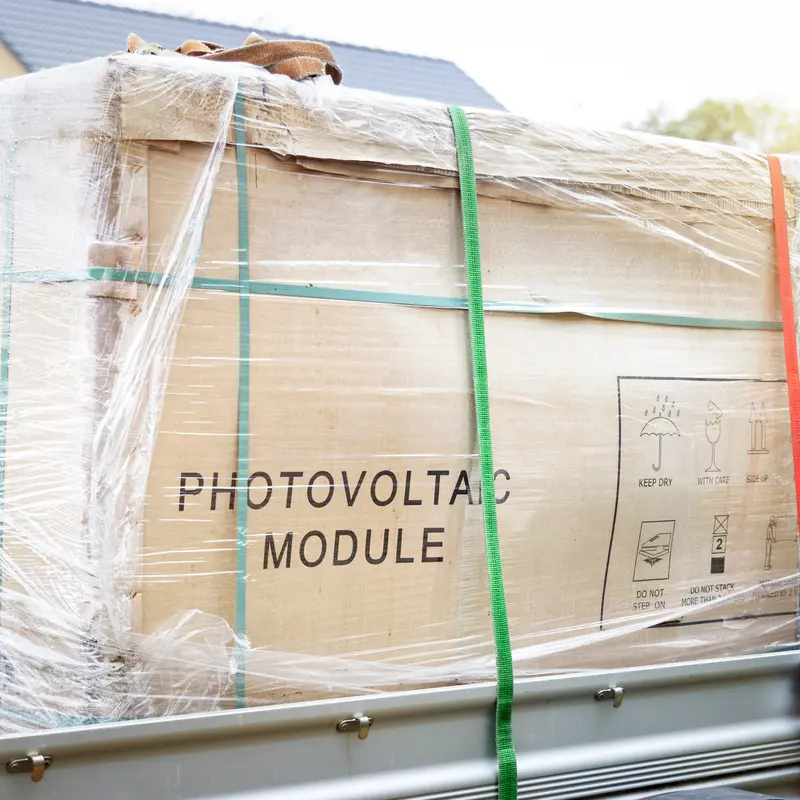 Solar panels & components are expected to rise in 2025, due to recent & expected tariffs
Net Metering & State-Level Changes
Beyond federal policy, changes at the state level are also impacting solar economics. In Virginia, net metering policies are under review and may be changing for systems installed after 2026.
APCo is currently pushing to reduce net-metering by 70%, and Dominion’s draft proposal is due to be released in May of 2025. Systems installed prior to these changes are guaranteed to keep the current net-metering terms.
What’s Next for Solar?
The residential tax credit is gone, but solar is far from dead. Virginia electricity rates have risen roughly 40% since 2020, with more increases on the way. Solar locks in your energy costs for decades, and installation costs remain low despite tariff pressures.
Third-party ownership options like solar leases and PPAs have become an increasingly popular path for Virginia homeowners. The leasing company claims the commercial tax credit (still available through at least 2027) and passes savings on to you—often resulting in monthly payments lower than your current utility bill.
Battery technology is also at its peak, making it easier to secure your home and energy with whole-home battery backup.
If you’re considering solar for your home, the fundamentals are still strong: rising rates, proven technology, and new financing options that make solar accessible to more homeowners than ever.
At Virtue Solar, we’re committed to helping homeowners navigate the new landscape and find the best solution for their energy needs. Reach out today for a free solar quote and see how solar can work for you in 2026.
Related Posts

What Happens to Solar Homes When the Power Goes Out?
What happens to homes with solar panels when the power goes out? We explain which solar homes stay powered, and the pros and cons of each.

Virginia Receives $156 Million for Solar For All Program
Virginia Receives $156 Million for Solar For All Program. Starting in 2025, about 50% of Virginians may be eligible for assistance.
The Solar Tax Credit Is at Risk: What Virginians Need to Know
Congress may axe The 30% Federal Tax Credit-- Here's what's happening, what you can do, and what you need to know.