
How to Lock In 25 Years of Low Energy Rates in 2026

On this page
Energy costs are impossible to ignore right now.
From crypto-mining to artificial intelligence to the massive data centers popping up across Virginia, the tech boom is fueled by one thing: electricity. And all of that demand is putting serious pressure on the grid—and on your utility bills.
If you’ve been thinking about installing solar on your home, you might be wondering: is residential solar still worth it in 2026? The short answer is yes—and in some ways, it’s more relevant than ever. Here’s why, and how a newer financing option is opening doors for Virginia homeowners who want to lock in predictable energy costs for the next 25 years.
The Energy Landscape Has Changed
On January 20, 2025—his first day back in office—President Trump declared a national energy emergency. The executive order cited “high energy prices that devastate Americans.”
Regardless of where you stand politically, the declaration underscores something many Virginians already know: energy costs are a real concern, and they’re not going down anytime soon.
The numbers tell the story. In August 2025, Virginia saw electricity prices surge 13% compared to the previous year—well above the national average of around 6%. Nationwide, electricity costs have jumped 40% since February 2020, and experts at the U.S. Energy Information Administration expect residential rates to climb another 13-18% by 2026.
And it’s not just a national trend. Right here in Virginia, the State Corporation Commission just approved a Dominion Energy rate increase on November 25th, 2025. The average residential customer will see their monthly bill rise by about $13.60 over the next two years—roughly 9%. That breaks down to an $11.24 increase in 2026, with another $2.36 bump in 2027.
Why the increases? A combination of factors: inflationary pressures on grid equipment like poles, wires, and transformers; growing demand from data centers (Dominion serves approximately 450 of them in Northern Virginia alone); and the basic reality that the grid needs upgrades to handle what’s coming.
This is the backdrop for any conversation about solar in 2026. Your utility bills are going up—the only question is by how much.
Why Solar Still Makes Sense
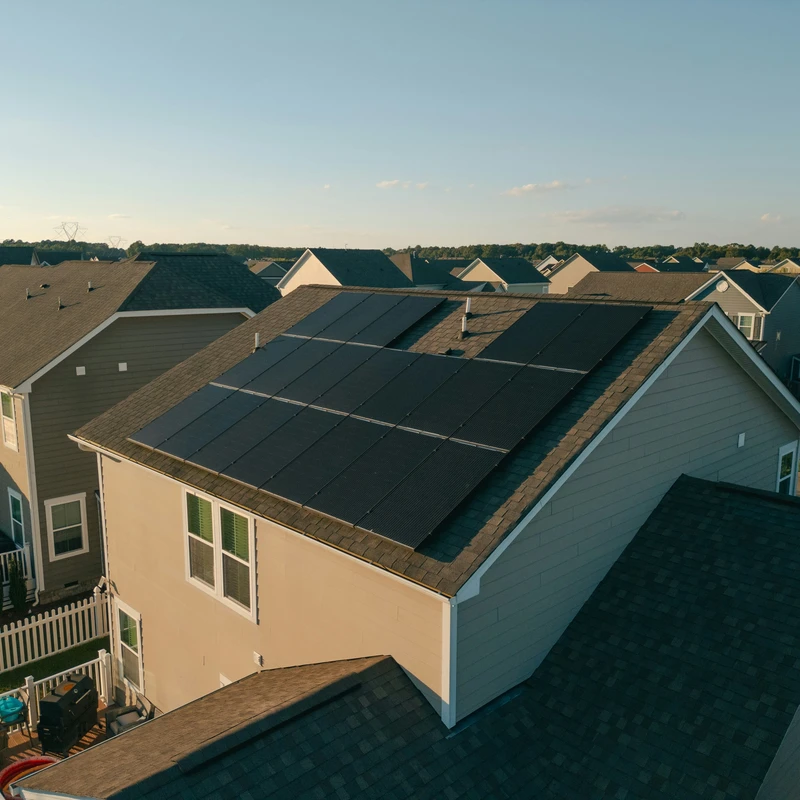
Here’s the thing about solar: it’s not a gamble on whether energy prices will rise. It’s a hedge against the increases we know are coming.
When you go solar, you’re essentially locking in your electricity costs. Instead of wondering whether your bill will be $150 or $180 this month—or $250 a few years from now—you know what you’re paying. Your panels produce power, and that power offsets what you’d otherwise buy from the utility.
Now, we’ll be the first to admit: the solar landscape has shifted. The 30% federal tax credit for residential systems is no longer available for homeowners who purchase after December 31, 2025. That was a significant incentive, and its absence changes the math for cash purchases.
But here’s where things get interesting.
A Different Path to Solar: Third-Party Ownership
Virginia homeowners now have access to something that wasn’t available until July 2024: third-party ownership, or TPO. You might also hear it called a solar lease or PPA (power purchase agreement).
Here’s the simplest way to think about it: instead of buying a solar system outright, you’re essentially renting your roof to a solar company. They install the panels, they own the equipment, they maintain it—and you pay them for the electricity it produces. It’s like trading your utility bill for a solar bill, except the solar bill is typically lower and far more predictable.
Why does this work financially? Because the commercial tax credit is still in place through 2027. The solar leasing company—as a business—can claim that 30% federal credit that’s no longer available to homeowners. They pass some of that benefit on to you in the form of lower payments.
We’ll be honest: we’ve historically been somewhat skeptical of leases. If you’ve followed solar news over the years, you’ve probably heard horror stories from California, Colorado, and other early-adopter states. Companies got greedy. They made the numbers seem like magic, painted glowing pictures for homeowners, and then the financial estimates or production numbers turned out to be wrong. The escalators—the annual rate increases built into contracts—were often 3-7% per year, which could actually outpace utility rate increases in some cases.
The industry has evolved. Today’s TPO agreements in Virginia typically have escalators between 0% and 2.99%—a much more reasonable range that’s designed to stay below utility rate increases. And with Virginia’s electricity rates climbing the way they are, that spread looks increasingly attractive.
When TPO Makes Sense
TPO isn’t right for everyone, but it’s a strong fit for certain situations:
You want $0 down and predictable monthly costs. No surprise bills in July when your AC is running constantly, or January when the heat pump is working overtime. You know exactly what your solar payment will be.
You’d rather not deal with maintenance. The third party owns the system, which means they service it. This is actually a bigger deal than many people realize. A typical service call in the solar industry can easily cost $500 to $1,200. With TPO, that’s not your problem—and the company guarantees the system’s production.
You want to put your capital elsewhere. Maybe you’d rather invest that $25,000-$40,000 in the stock market, home improvements, or simply keep it liquid. TPO lets you get solar savings without tying up significant cash.
You want to make an environmental impact now. Every kilowatt-hour your panels produce is a kilowatt-hour that doesn’t need to come from the grid. With Virginia’s energy demands surging—data centers are expected to double their electricity consumption by 2030—distributed solar is more valuable than ever.
When TPO Might Not Be Right for You
We believe in being upfront about limitations. TPO isn’t the best choice if:
You want to own your equipment outright. Some people simply prefer owning their assets. If that’s you, a cash purchase—while no longer eligible for the residential tax credit—still provides the best long-term return on investment.
You’re planning to move within 0-5 years. TPO agreements typically run 20-25 years, and offer a buyout after 5 years. While they can usually be transferred to new homeowners, it adds a layer of complexity to a home sale. If you know you’re moving soon, it’s important to get clear on the steps to transfer the lease so you don’t get caught by surprise.
You want to maximize your financial return and have the capital to invest. Cash purchases, despite losing the tax credit, still offer the highest total savings over the system’s lifetime. You’re paying more upfront, but you’re keeping 100% of the electricity savings rather than sharing them with a third party.
Our Perspective
The reality is that TPO systems can and do work. The benefits are real, especially now that the residential tax credit has sunset and the remaining Virginia solar incentives do the work. Servicing costs are a legitimate concern in the solar industry—one that TPO addresses by putting that responsibility on the company, not the homeowner.
We fully expect energy prices to continue rising. We’ve seen the data, we’ve read the SCC orders, and we’ve watched Dominion’s rates climb year after year. Trading a payment to your utility for a payment to a solar company—when the solar payment is lower and more predictable—seems like a pretty smart move to us.
It means you can save money year after year while massively reducing your environmental impact. And in a state where energy demand is growing as fast as it is here in Virginia, that matters.
Is TPO right for everyone? No. Is it a scam? Absolutely not—as long as you’re working with a company that’s honest about the numbers and isn’t trying to make everything look like magic.
If you’re curious whether solar—with TPO or cash—makes sense for your home, we’re happy to walk through the numbers with you. No pressure, no magic tricks. Just honest advice from people who’ve been installing solar in Virginia since 2015.
Get a free quote and see how much you can save with solar.
Ready to explore your options?
Related Posts
Solar Myths Debunked: “0% Financing”
“0% financing” on solar often hides dealer fees up to 35% of project cost — far more than a traditional solar loan. Here's how to spot and avoid it.
Are Local Solar Companies Better Than Big National Companies?
Should you choose a local solar company, or a big national one? Look at the pros and cons, and see which solar company is best for you.
How Many Solar Panels Do I Need?
Want to know how many solar panels your home needs? We explain how solar systems are sized, and how to calculate how much solar you need.