
Dominion Energy’s NEM 2.0 Proposal: What It Means for Solar in Virginia

Update — May 5, 2026: The SCC issued its final ruling on April 30, 2026, and net metering in Virginia is protected. The 1:1 retail credit, your SREC ownership, and free interconnection were all preserved. New customers will see a small $1/month admin fee and a different year-end excess rate, but the fundamentals are intact. Read the full breakdown: Net Metering Protected in Virginia: SCC’s Final Ruling on Dominion’s NEM 2.0. For the full picture, see our guide to Virginia solar incentives. The original analysis of Dominion’s proposal — what was on the table before the ruling — is preserved below.
Net metering works a lot like a bank. You deposit energy when your solar panels produce more than you need, and you withdraw it when you need more than you produce. But imagine if your bank changed the rules and said, “Thanks for your deposit, but we’re only giving you $0.45 back for every dollar you put in—because we spent a lot of money building the bank.” Would you be excited about that?
Dominion Energy has officially filed its proposal to overhaul net metering in Virginia, and the changes they’re pushing could deal a serious blow to solar installations in Virginia. If you’re a homeowner or business considering solar — especially in Dominion territory like the Richmond metro and Northern Virginia — this proposal directly affects your energy savings, your rights, and your return on investment.
Here’s what you need to know.
What Is Dominion Proposing?
Dominion’s new “NEM 2.0” proposal would drastically change how solar homes & businesses are credited for the electricity they send back to the grid.
Instead of the current 1:1 energy net metering—where your excess solar energy is credited at the same rate you pay for electricity—Dominion wants to:
-
Switch to half-hourly “real-time” netting rather than annual netting.
-
Replace 1:1 credits with an “Export Credit Rate” based on the price Dominion pays for solar through power purchase agreements (PPAs).
-
Claim ownership of your solar renewable energy credits (SRECs) and use them toward their own RPS requirements—even though they didn’t pay for or build your system.
-
Charge new fees, including a $100–$750 application fee and a $1/month administrative fee.
What Is the New Export Rate?
Instead of crediting you the current residential rate of about $0.14/kWh, Dominion proposes paying solar homeowners a market-based rate, tied to their PPA agreements (currently it would be $0.09553/kWh). But here’s the kicker: they also want to claim ownership of your SRECs.
If you remove the value of those credits—currently around $0.032/kWh—Dominion would only be compensating solar customers $0.063/kWh for the energy they export.
That’s a 55% reduction from today’s compensation. But according to Dominion’s own testimony, they want a compensation rate of $0.048 if they can’t get the SRECs (a ~65% reduction).
Businesses installing solar would get the same new export rate, although their reduction in savings would be less (commercial customers are charged a lower kWh rate than residential).
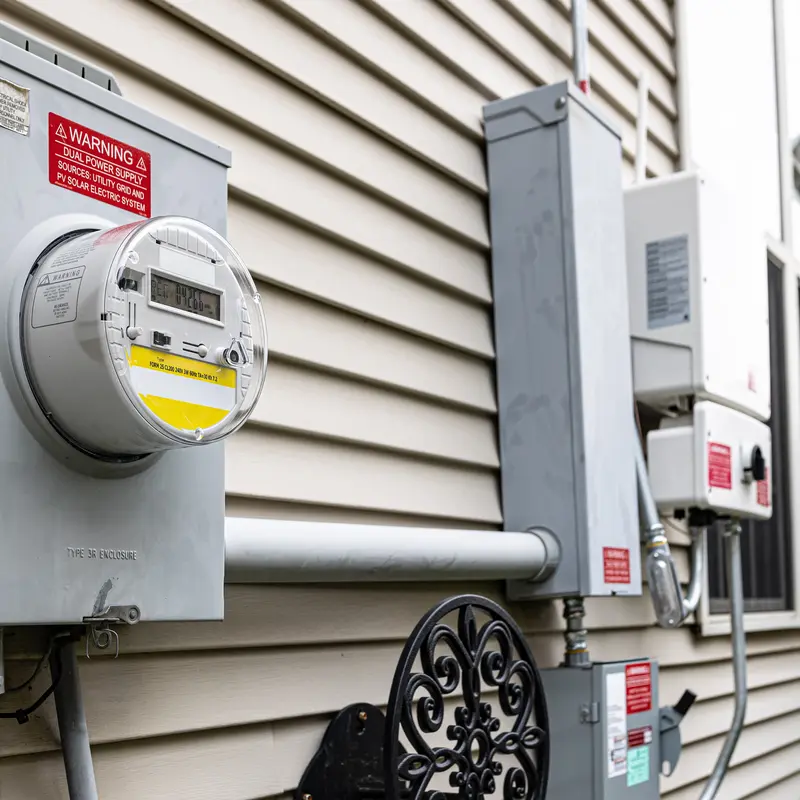 Dominion’s proposed changes would dramatically reduce the savings for homeowners installing solar in Virginia
What’s the Problem With That?
-
This would massively reduce the value of solar energy. Your expected savings would also be variable depending on the PPA market, making it hard to predict long-term returns.
-
Net-metering is supposed to facilitate solar adoption. Under Dominion’s proposed “interval netting,” any solar energy that isn’t immediately used in your home would be sold back at the reduced rate, rather than being stored at a 1:1 value. The entire point of net-metering is to solve exactly this issue—solar does not produce the same amount of energy 24hrs a day. It produces most energy mid-day, and tapers off. Net metering allows us to use the resources we already have (the grid) to even out this power draw, and facilitate adoption of clean energy.
-
PPAs are not the same as net metering. Power purchase agreements are contracts Dominion signs with producers that have excess energy, and want to monetize that excess. Net-metered systems, on the other hand, are installed by individual homeowners to offset their own energy use. Trying to equate the two is nonsensical—but by shifting from annual netting to real-time netting, it essentially forces everyone into a PPA, whether they want it or not.
-
SRECs are your property. Under Virginia law, solar businesses & homeowners earn SRECs for generating renewable electricity. They can sell these credits for extra income. They’ve invested in the equipment to produce clean energy, so they own the SRECs. But Dominion wants to claim some of those SRECs, even though they aren’t paying a penny towards building the solar system.
-
Their proposal would stifle renewable energy development in Virginia, which goes against Virginia’s renewable energy goals. Virginia’s solar market is still very young. In Virginia, where metering customers account for less than 3% of our overall generation, means we have a long long way to go. Proposals like this NEM shift are more fitting in markets like California, where they have nearly 30% distributed energy production, and need to curtail it. In Virginia, where there is a clear need and desire for clean energy– It makes sense to keep strong net-metering in place, until the market is significantly more mature.
Who Would Be Affected? And When?
Dominion’s NEM 2.0 proposal would apply to homes and business that go solar after the rule takes effect (except for low-income projects). If approved, this could begin as soon as mid-2026.
If you already have solar, your net-metering agreement will not change. So if you’re planning to install solar on your home or business in the next year or two, now is the time to act. Working with a Virginia solar company that’s been navigating Dominion’s interconnection rules since 2015 helps you secure today’s net-metering terms before any rule change takes effect.
What Can You Do?
1. Submit Comments to the SCC
The State Corporation Commission (SCC) will decide whether to approve or deny Dominion’s proposal. Public input matters. Once a hearing date is set, we’ll share how to submit a public comment.
2. Go Solar Before the Change
If you install solar before the final ruling takes effect, you’ll be grandfathered into the current 1:1 net metering program. That locks in the best available savings.
3. Contact Your Legislators
Let your state representatives know that net metering matters to you. Ask them to push for a fair value-of-solar study and to protect homeowner energy rights. And also, vote!
Final Thoughts
Dominion’s NEM 2.0 proposal would make it much harder for Virginians to go solar. It would cut into the savings homeowners and small businesses can expect, and give even more control to the utility. But as Virginia’s energy needs continue to grow—especially with the rise of datacenters—we should be encouraging more local, clean energy, not less.
Instead of limiting solar, we should be building strong policies that help it grow. When net metering works well, it supports jobs, saves money, and brings more renewable power to our communities.
That’s something we can all get behind—homeowners, businesses, and utilities working together for a stronger energy future.
Related Posts
Victory for Virginia Solar: APCo Net Metering Preserved!
Virginia's SCC preserves solar net metering! Learn how the August 2025 ruling protects full retail credit, 12-month term, and solar savings!
New Treasury Rules Expand Solar Tax Credit Access for Nonprofits
On Tuesday, Nov. 19th the IRS finalized its Direct Pay guidelines, expanding access to the solar tax credit for nonprofits and partnerships.
Is Solar Right for Your Virginia Business?
Is solar right for your business? Find out the current commercial incentives, like the solar tax credit, REAP grant, and other solar benfits.