
Solar Panel Maintenance Costs: What to Expect and How to Avoid Them

On this page
Updated October 2026: the prices below reflect what our service team charges this year, including the $600 inspection for systems we didn’t install.
If you’re considering installing solar on your home, you’re probably focused on the benefits—lower electric bills, energy independence, and long-term savings (and rightly so!). But there’s a practical side that many installers won’t talk about upfront: what happens if something breaks?
We’ll go over what usually goes wrong, what solar servicing and repairs actually cost in Virginia, and how to protect yourself from unexpected expenses.
Do Solar Systems Require Maintenance?
The short answer is yes—though not often. While it’s common to hear that solar panels have “no moving parts,” that doesn’t mean the entire system will be maintenance-free. Solar panels, inverters, and batteries all have lifespans and may need service at some point over a 25+ year lifetime.
While solar systems don’t need regular cleaning or tune-ups, failures do happen, especially as parts age. Standard warranty periods for solar equipment:
-
Panels: 25–30 years
-
String inverters: 12 years
-
Microinverters: 25 years
-
Batteries: 10–15 years
When components fail, manufacturers usually cover the replacement part—but not the labor to replace it. Labor costs in Virginia can run $100–$150/hour, and a simple service call can quickly turn into a few hundred dollars out of pocket (especially if your installer is located more than a few minutes away).
What Breaks the Most?
The most common issue homeowners experience is monitoring related. If your solar system connects via WiFi, there’s likely going to be a connection issue at some point as well. But most of the time, solar is actually still working. Here’s how to check if your solar system is working, and if you have Enphase, what the lights on your Enphase gateway mean. Reliable internet, and using ethernet whenever possible, greatly reduces the chances that your monitoring will go offline.
In our experience (and data backs this up), inverters are the most common point of solar system failure. They do the heavy lifting—converting DC power from your panels into usable AC for your home, managing grid interaction, and handling monitoring. It’s a complex device with more components that can fail.
Panels, on the other hand, are relatively simple. A 2017 study by the National Renewable Energy Lab (NREL) found a failure rate of just 0.05% in solar panels—5 out of every 10,000 panels.
Solar Insure’s study, based on 100,000+ systems found:
-
String inverters failed 1.03% of the time
-
Microinverters failed only 0.055% of the time.
We use Enphase microinverters for most rooftop installs for exactly this reason—they eliminate a single point of failure, and their published failure rate is just 0.05%.
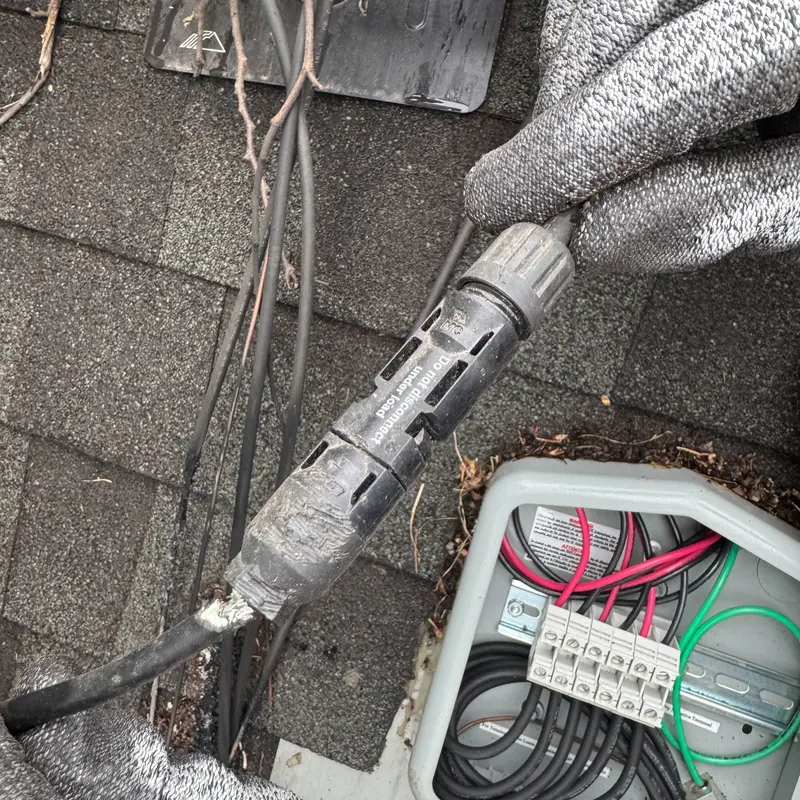 Rodent damage to wiring on a solar system can be costly. If you live in a wooded area, consider critter-guard with your install to prevent squirrels from nesting under your array — we can also retrofit critter guard onto an existing system.
How Much Does Maintenance Cost?
Here’s what to expect in labor costs if you’re not covered by a labor warranty:
-
Site visit/diagnostic: $200–$500 is typical. Ours is $350 for a system we installed (waived if we can identify the issue remotely), or a $600 inspection for a system that’s new to us, with $120 credited toward the repair. A visit is usually necessary to get an RMA claim issued by the manufacturer.
-
Microinverter replacement: ~$400 – $800 (higher cost depending on steepness of roof, location of failed micro)
-
String inverter replacement: ~$300 – $600 (easier, usually mounted on a wall)
-
Squirrel / rodent damage: $500 – $5000
-
Solar panel replacement: $400 – $800
Those figures are labor. If a string inverter fails out of warranty, add the hardware: a replacement residential string inverter typically runs $1,500–$3,000 for the unit itself, which is why an inverter that dies in year 13 is the single most expensive bill most solar owners ever see. Microinverters are cheaper individually, but they’re on the roof, so the labor side is higher.
These aren’t frequent, but they can happen. Prior to using Solar Insure, we would often grit our teeth when preparing invoices for service calls—We don’t like sending steep servicing bills either. Our goal is to provide customers a seamless experience, with no surprises down the road.
Need a repair on a system we didn’t install? We service solar systems from any installer within about 1.5 hours of Charlottesville — including systems whose original installer has gone out of business. It starts with a $600 inspection, and $120 of that is credited toward any repair. Learn more about our solar servicing and repair or start a service request.
How to Avoid Solar Maintenance Costs
The first thing is to use the best installer you can. In that same 2020 report by NREL, they listed quality of installation as one of the biggest factors in whether a system would fail. We go above & beyond to ensure our systems are built to the highest standards. That includes using high-quality equipment, and eliminating connectivity issues by hard-wiring communications to your router, instead of relying on WiFi.
At Virtue Solar, we also offer something most companies don’t: 30 years of full system warranty coverage through Solar Insure. This includes:
-
All labor and equipment costs for repairs or replacements on major equipment
-
Protection even if a manufacturer goes out of business
-
No deductible or hidden service fees
That means if your inverter fails in year 18, you’re not paying a dime. We handle the claim, swap the part, and make sure your system is back online—no charge.
This warranty is built into the residential solar projects we install across Virginia at no extra cost. There are some notable exceptions (rodent damage & communications are some of them), but overall it provides incredibly long-term protection, and greatly minimizes the chance of surprise service fees over the years.
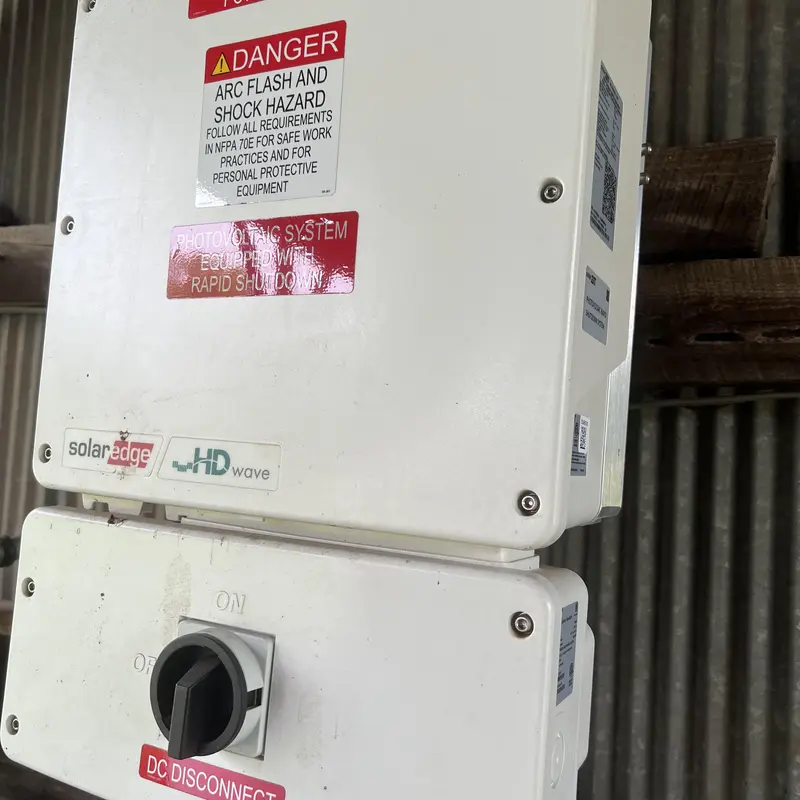 Inverter replacements are the most common issue we encounter. Having a reliable inverter, and making sure that you don’t have to pay for labor down the road are an important way to avoid unexpected costs.
Leasing Your Solar System
Solar leases, which became legal in Virginia in 2024 and are quickly becoming a preferred financing option, are a great option if you want to lower your electric bill right away without making an upfront investment.
With a lease, you’re essentially renting the solar system from a third-party provider. They own the equipment, they maintain it, and they guarantee how much it will produce. No liability for servicing at all—That’s handled by the leasing company and your installer (hey, that’s us!).
Here are some of the major upsides to leases:
-
$0 upfront cost – You can go solar without paying anything out of pocket.
-
Guaranteed performance – If your system under-produces, the leasing company cuts you a check for the shortfall.
-
No service bills – If a microinverter fails in the middle of your steep roof, you’re not the one calling (or paying for) a repair crew—the leasing provider & installer handle it.
-
Fixed monthly costs – Leases help smooth out seasonal swings in your power bill, with fixed monthly payments.
-
Worry-free ownership – The leasing company handles all maintenance, monitoring, and insurance.
Leasing is especially helpful for homeowners who:
-
Want to go solar without a large upfront investment (the leasing company monetizes the commercial tax credit and other incentives, passing savings on to you)
-
Want to eliminate surprise repair costs
-
Prefer predictable billing instead of utility rate hikes
Leasing does typically mean lower long-term savings compared to owning your system outright, but for many customers, the convenience, predictability, and zero maintenance burden are well worth it—and it means you can put your cash to work elsewhere.
Final Thoughts
Solar is a long-term investment, and it only makes sense if your system stays up and running. That’s why we don’t just build reliable systems—we also make sure you’re protected when something eventually needs service.
Whether you’re buying a system outright or considering a lease, the most important thing is to understand who’s responsible if something breaks—and how much that might cost.
If you’d like a free quote or just want help comparing options, get in touch. We’re happy to walk you through it. And if your existing system needs attention right now, our solar servicing team can help.
Related Posts
What Happens to Solar Homes When the Power Goes Out?
What happens to homes with solar panels when the power goes out? We explain which solar homes stay powered, and the pros and cons of each.
What Happens to Solar Panels When You Sell Your House?
Selling a home with solar panels? Learn how cash purchases, loans, and leases are handled at closing, and how to make sure it goes smoothly.
8 Questions to Ask when Choosing a Solar Company
Ask the right questions when looking for solar. Learn red flags, how to vet solar companies, and avoid overpaying for your solar system.