
Is Solar Still Worth It Without the Tax Credit?

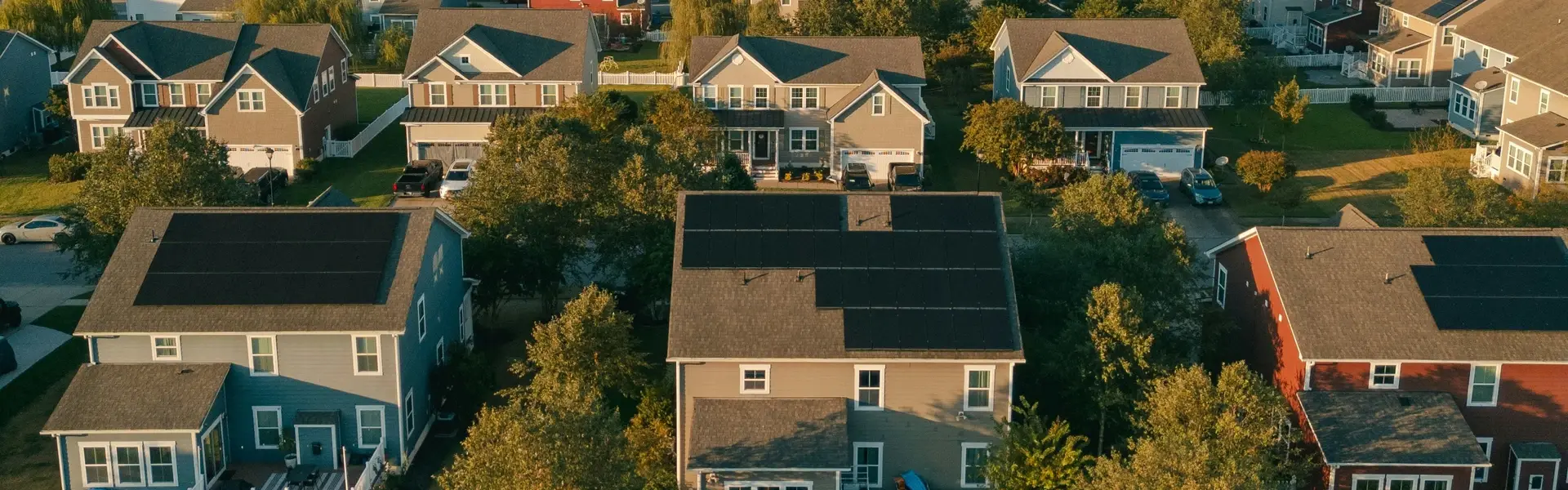
Short answer — yes. But it depends on where you live, what you’re paying for electricity, and how you finance it.
If you’ve looked into residential solar before, you’ve probably seen the 30% federal tax credit mentioned in just about every article, calculator, and sales pitch out there. It was one of the best incentives available to homeowners — and as of December 31, 2025, it’s gone. The One Big Beautiful Bill Act eliminated the residential solar tax credit nearly a decade ahead of schedule. No phase-down. No warning, just gone. The good news: Virginia solar incentives like net metering and SRECs are still very much in place.
So, does solar still make sense without it?
We’re a Virginia-based solar installer, so we’ll share what we’re seeing here — but this question matters nationally, and the answer is worth understanding no matter where you live.
The Tax Credit Was a Bonus — Not the Whole Story
Here’s a useful way to think about the federal Investment Tax Credit: it was a sale. And nobody likes missing a sale. But the real engine behind solar’s value has always been two things: the falling cost of equipment, and the rising cost of electricity. Both of those trends have only accelerated.
The economics of solar have changed dramatically over the last 15 years. A system that would have cost north of $50,000 back then now comes in around $27,000–$30,000 before any incentives.
Meanwhile, electricity rates have been quietly climbing. There’s tons of talk about AI and data centers, which are putting huge pressures on the grid. The national average residential rate hit 17.78¢/kWh in late 2025 — up about 28% since 2021. Average monthly electric bills have climbed from $121 to $156 in that same window. And projections from ICF Climate Center suggest residential rates could rise another 15–40% by 2030.
So while the tax credit absolutely made solar a better deal, it was riding on top of fundamentals that were already strong and getting stronger. Solar panels got cheaper. Electricity got more expensive. And the price of energy in most states seems to be accelerating.
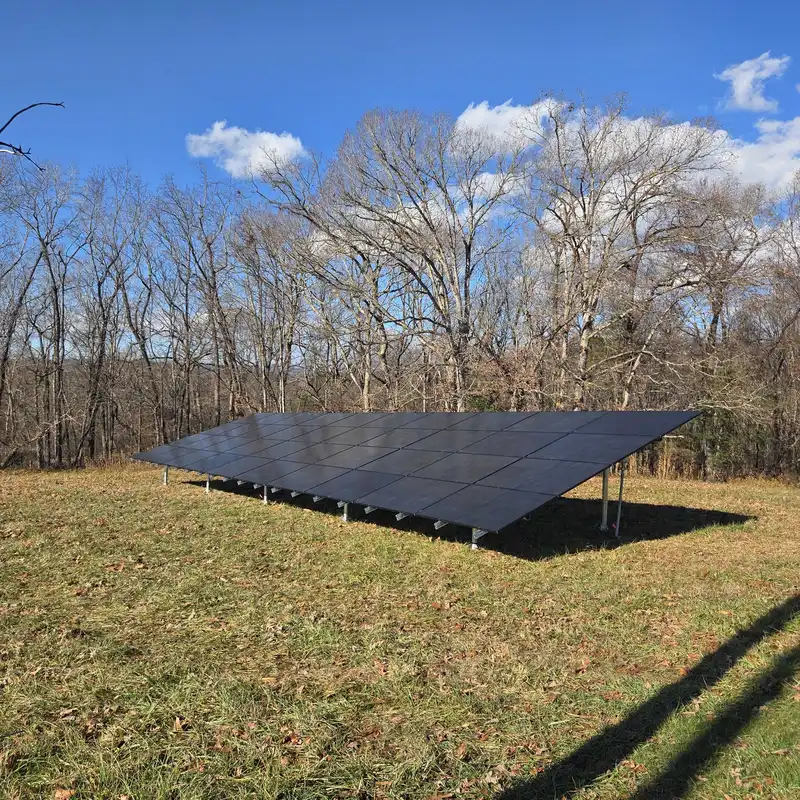
Does Solar Still Pay for Itself?
Yes — it just takes a bit longer. While nobody likes to miss out on a sale, most estimates put the national average payback period somewhere around 10–12 years, compared to 7–9 years with it. That’s a real difference, but it’s still well within a solar system’s 25–30 year lifespan. After the system pays for itself, you’re generating electricity for essentially nothing.
And that payback window is heavily influenced by your local electricity rate. And national rates are going up quickly. In states with high or rapidly rising rates — the math is better. In states with low rates and limited solar policies, it can take longer, and we’d never tell someone solar makes sense when it doesn’t.
It’s important to note that solar is not equally valuable everywhere. But in most of the country — and especially in states where rates are climbing — it remains an excellent investment.
What About Financing?
This is where things have actually gotten interesting. The loss of the residential credit was a blow to cash purchases and loan-financed systems. But the commercial investment tax credit (Section 48E) is still alive, and that has opened the door to third-party ownership products that didn’t exist at this scale a few years ago.
With TPO — Third-Party Ownership — a solar company owns the system on your roof and claims the commercial tax credit themselves. You don’t buy anything. You pay a flat monthly rate that’s typically lower than your current utility bill, and the TPO provider handles all maintenance and repairs for the life of the agreement. It’s $0 down, predictable payments, and in most cases, savings from day one.
TPO isn’t new, but it’s surging. It accounted for over 50% of residential solar installations by the end of 2024 — the highest share in nearly a decade — and it’s projected to keep growing through 2026 and beyond. For homeowners who don’t want to write a big check or take out a loan at today’s interest rates, TPO has become the most accessible path to solar (And yes, we now offer TPO options at Virtue Solar).
So What’s Actually Driving Solar in 2026?
Well, the energy crisis. Most folks are not betting on paying less for electricity in the coming years, and solar offers a way to lock in that rate.
Every kilowatt-hour your solar system produces is a kilowatt-hour you don’t have to buy from the grid. In 2020, that saved you about 13¢. In 2025, it’s saving you closer to 18¢ (nationally speaking). And if rate projections hold, it’ll be worth even more next year — and the year after that.
The way we see it, solar is here to stay. With the way things are heading, the bonus the tax credit offered will be negated in 1-2 years The tax credit made it easier. Rising electricity costs are making it necessary.
What About Virginia Specifically?
We’re a Virginia-based solar installation company — we’ve been installing solar here since 2015 — so we thought we’d focus a on our community, and what it means here.
Virginia has a unique energy situation. The state imports more electricity than any other in the country — roughly 40% of its power comes from out-of-state sources, up from about 18% in 2020. That dependence has been driven largely by explosive datacenter growth in Northern Virginia, which now consumes approximately 25% of the state’s total electricity.
That growth isn’t slowing down. A December 2024 JLARC report projected that unconstrained datacenter demand could nearly triple Virginia’s electricity consumption by 2040. Even under more conservative scenarios, demand is expected to roughly double.
The result? Rising rates — with no relief in sight. Virginia residential electricity rates have climbed approximately 30% since 2021, with a 13% year-over-year jump in 2025 alone. Additional rate increases have already been approved for 2026 and 2027, and JLARC estimates that datacenter-driven demand could add another $37/month to residential bills by 2040.
For Virginia homeowners, solar isn’t just a way to save money — it’s a hedge against a grid that’s under increasing pressure.
Is Virginia a Good State for Solar?
Virginia is a strong solar state. The policy foundation is solid: 1:1 net metering (you get full retail credit for the electricity your system sends back to the grid), property tax exemptions for residential solar, and the Virginia Clean Economy Act’s commitment to 100% clean energy by 2045. The SCC also recently rebuffed APCo’s attempt to limit net-metering, and a similar result is expected in the Dominion case (although not decided at time of writing).
The state ranks 8th nationally in installed solar capacity, but fewer than 3% of Virginia homes currently have solar — which means there’s enormous room for growth. We’re already seeing an uptick in demand over years past, and our equipment distributors are signaling the same.
Virginia also legalized residential TPO just recently — on July 1, 2024 — so homeowners now have access to $0-down solar options that weren’t available here before. For Virginians who want to lock in 25 years of predictable energy costs while utility rates keep climbing, TPO is a straightforward path to get there.
The Bottom Line
The 30% tax credit was a great incentive. We were sad and concerned when we heard it was going to be eliminated. But solar in 2026 isn’t the same product it was in 2010, and we’ve been blown away by the interest and trends we’ve seen in 2026 already. And it make sense. The cost of solar is at one of its lowest points ever. Electricity rates are surging. Financing options like TPO make it accessible without a big upfront investment. And the systems themselves last 25–30 years.
If you’re in Virginia and you’ve been thinking about solar, the fundamentals are strong — arguably stronger than they’ve ever been, tax credit or not. And we’re happy to walk you through what it looks like for your specific home. And if you’re somewhere else, reach out to your local installers, get a quote or two, and see if TPO is active in your state.
Related Posts

What are Solar Renewable Energy Credits (SRECs)?
Learn what Solar Renewable Energy Credits (SRECs) are, how to earn them, and how to make more money from your solar system.

Hail vs. Solar Panels: Who Wins?
Does hail damage solar panels? Find out if you're at risk, which panels are strongest, and which areas have highest risk from hail.
How to clean solar panels
Learn how to clean your solar panels, to get the most out of your solar. See when to clean them, how to do it, and how to avoid mistakes.