Net Metering Protected in Virginia: SCC's Final Ruling on Dominion's NEM 2.0
Virginia SCC's April 30, 2026 final ruling preserves 1:1 net metering and SRECs for solar. Small admin fee added for new Dominion customers.


Net metering, SRECs, the property-tax exemption, the federal credit, and $0-down financing — every program that lowers the cost of solar in Virginia, current for 2026.
Last updated June 2026
Virginia doesn't have a single big state rebate — instead, several programs stack together to bring the cost of solar down and pay you back over time. Here's what's available in 2026, who it's for, and what it's worth.
| Incentive | Who it's for | What it's worth | 2026 status |
|---|---|---|---|
| Net metering | Every grid-tied solar home | Full retail credit for the power you send back — the biggest saver | ✅ Protected by the SCC |
| SRECs | Any solar system | ~$27–33 per 1,000 kWh produced, paid on top of bill savings | ✅ Set to rise under a new 2026 law |
| Property-tax exemption | Homes with systems up to 25 kW | No extra property tax on the value solar adds | ✅ Automatic, statewide |
| Federal tax credit | Businesses now; homeowners via financing | 30% of system cost (commercial credit, through 2027) | ⚠️ Residential version ended Jan 2026 |
| $0-down financing (TPO) | Homeowners | Lower, fixed monthly payment with nothing upfront | ✅ Available |
| Virtual power plant | Homes with battery storage | Get paid to share stored power at peak times | 🔜 Coming to Dominion ~late 2026 |
The big one
Net metering is the most important solar incentive in Virginia — and the good news is it's no longer an open question here. Back-to-back legislative and regulatory wins have kept it strong and secure, and it's what lets you produce your own power and save accordingly. When your panels make more electricity than your home is using, the extra flows back to the grid and your utility banks a credit — at the full retail rate, the same price you'd pay to buy that power back. At night or on a cloudy day, you spend those credits instead of buying electricity. A well-sized system covers most of your yearly usage this way.
Virginia has defended net metering twice in two years. In 2025, regulators rejected Appalachian Power's attempt to cut export credits by roughly 70%. In 2026, the State Corporation Commission issued its final ruling on Dominion's NEM 2.0 case and kept full retail net metering in place. If you're new to how it works, start with our plain explainer on net metering.
Each utility company sets its own rates, so your solar payback depends a bit on who serves you. Click yours for the details: Dominion, Appalachian Power, SVEC, Rappahannock (REC), Harrisonburg, and CVEC.
Federal
The 30% residential federal tax credit (Section 25D) ended on December 31, 2025. If your system was installed before then, here's how to claim the residential tax credit (if you didn't already!) — and the change that ended it.
For 2026 and beyond, the 30% credit still exists for businesses (the commercial 48E credit, available through 2027). Homeowners can still capture that value indirectly through $0-down financing: the company that owns the system claims the commercial credit and prices it into your monthly payment. Our complete guide to the federal solar tax credit walks through who qualifies for what.
Ongoing income
A Solar Renewable Energy Certificate (SREC) is created every time your system produces 1,000 kWh of electricity — about one SREC per kilowatt of panels per year. You sell them to a broker, and the income is separate from your bill savings: it's based purely on how much you produce. A typical 10 kW home system mints roughly 12–14 SRECs a year, recently worth about $27–33 each.
Why do they have value? Virginia requires utilities to source a growing share of their power from solar; to meet that target they either buy SRECs from owners like you or pay a penalty for falling short — about $75 for every SREC they're missing. That penalty isn't officially a price cap, but in practice it sets the ceiling on what an SREC sells for. A new 2026 law, the Distributed Generation Expansion Act (effective July 1, 2026), raises that solar requirement from 1% to 4.5%. RECmint, an SREC broker active in Virginia, estimates the change could lift SREC revenue 60–90% over the following 18 months as demand catches up. Our guide explains how SRECs work and how to sell them.
Automatic
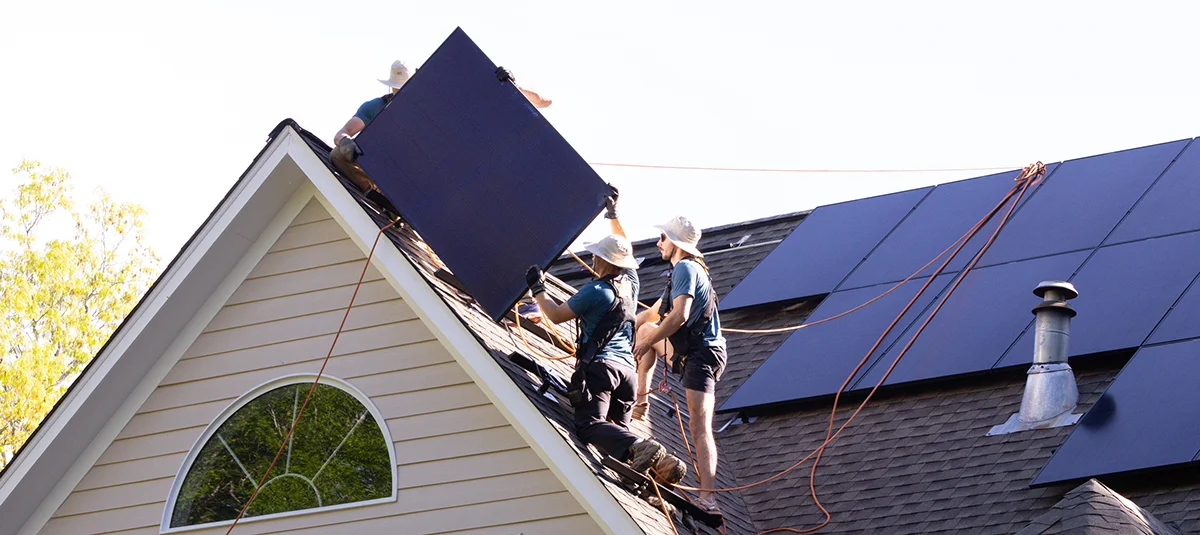
Adding solar raises your home's value — and normally, higher value means higher property tax. Virginia law (Code §58.1-3661) exempts that added value from taxation for residential systems up to 25 kW. It's automatic and statewide: you keep the home-value boost without a bigger tax bill, and there's nothing to apply for.
Some localities go further. Charlottesville, for example, adds a local solar tax credit on top — see solar incentives in Charlottesville for that detail.
Coming in 2026
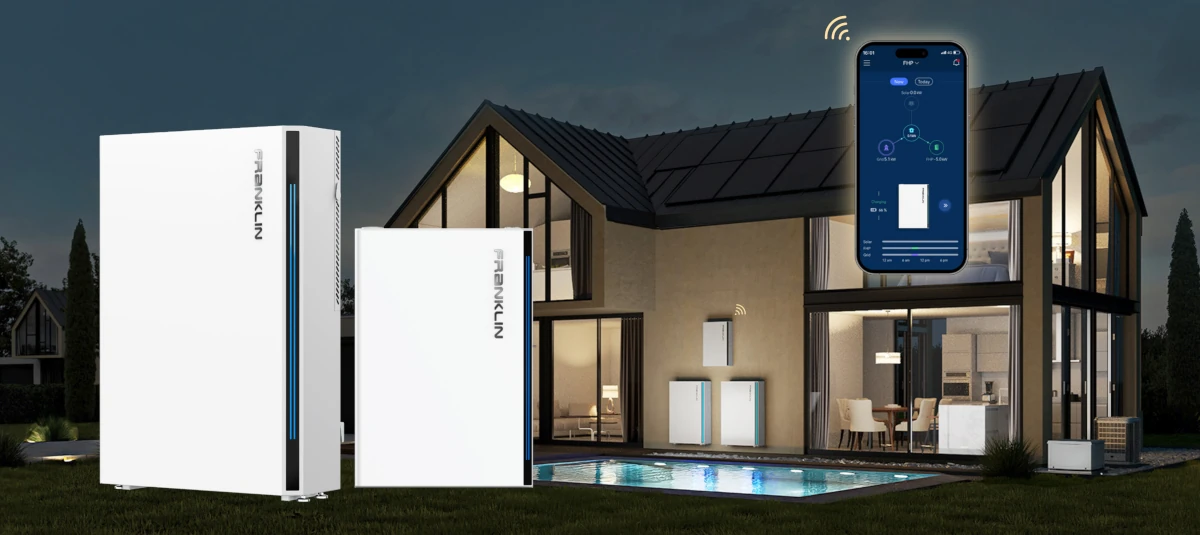
A virtual power plant (VPP) links thousands of home batteries together so a utility can lean on them during the few hours a year when the grid is most stressed — usually hot summer evenings. You get paid for the power your battery contributes, it always keeps a backup reserve for you, and you can opt out of any event. If the grid actually goes down, your battery stops sharing and powers your home instead.
Virginia's 2025 Community Energy Act requires Dominion to launch one. Dominion filed its pilot with the SCC in December 2025 and expects to start enrolling customers around late 2026. If battery storage is something you're weighing anyway — for backup power and lower bills — having one in place would let you consider the program once it opens. We often install the FranklinWH aPower 2 for whole-home backup, though Dominion hasn't said yet which batteries will qualify.
You opt in (usually through your installer) and your battery joins the utility's network in a grid-services mode.
On a handful of high-demand evenings, your battery sends some stored power to the grid — down to a reserve you set, never below it.
You're paid for what you contribute across the season, and your backup protection is untouched the rest of the year.
What we know as of June 2026: Dominion's program is real and on the way, but the company has not yet published the actual payment amounts for Virginia — those are expected this fall, with the program's tariff filing. We'll update this page when the real numbers are set. (We've covered comparable programs in other states to give a sense of the range in our explainer: Dominion's virtual power plant is coming to Virginia.)
Why this matters now
Incentives matter more when the alternative keeps getting more expensive — and in Virginia, it is. In late 2025, regulators approved Dominion's first base-rate increase since 1992: about $11.24 more per month for a typical home starting in 2026, with another increase due in 2027. Statewide, electricity prices jumped roughly 13% in a single year, more than double the national pace. Appalachian Power already has Virginia's highest residential rates, up more than 150% since 2007.
The big driver is data centers: Northern Virginia hosts around 250 of them, and their power demand is projected to roughly quadruple by 2035 — a cost that lands on everyone's bill. Solar plus net metering lets you lock today's rate in for decades instead. We dig into the numbers in why Virginia's data centers make rooftop solar more valuable than ever and on our rising utility rates page.
How to pay for it
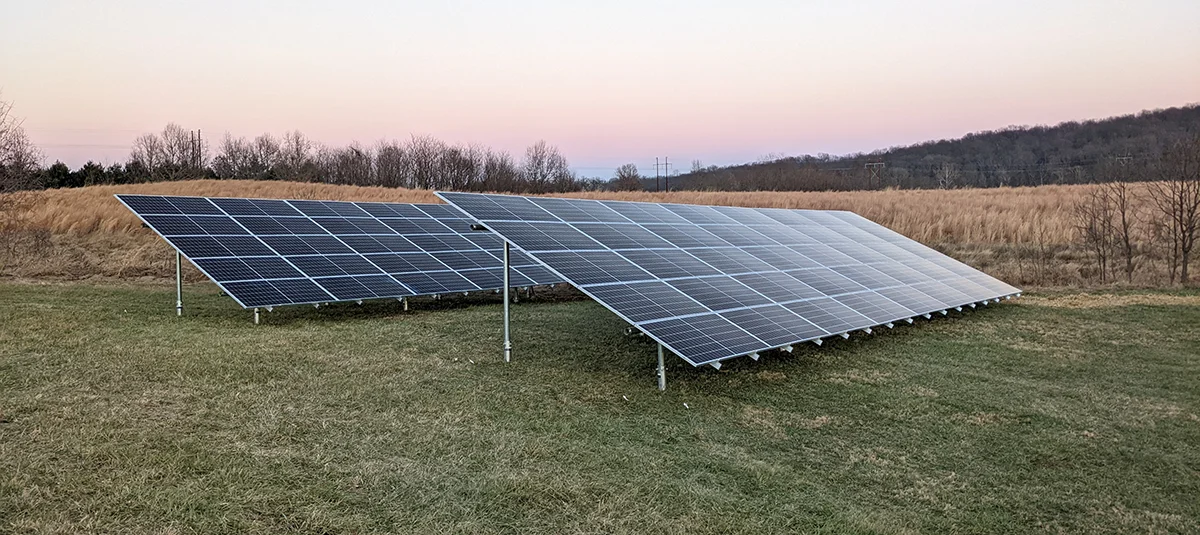
Paying cash gives the best long-term return — most systems pay for themselves in about 10 years, leaving roughly 20 years of nearly free power after that. But not everyone wants to pay upfront, and that's where third-party ownership (TPO) comes in. With TPO, a company owns the system and you simply pay for the power it makes — usually less than your current utility bill.
Newly available statewide since 2024 — here's the background on third-party solar leasing in Virginia.
See how TPO financing works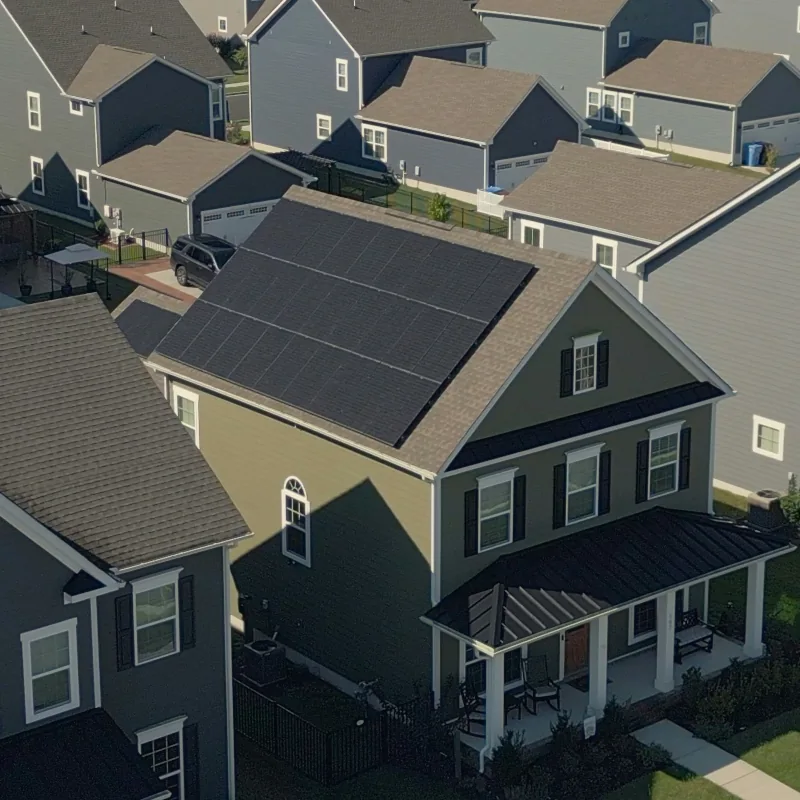
Full retail net metering, SRECs paid on your production, the automatic property-tax exemption, and $0-down financing to skip the upfront cost. Battery owners may also be able to join Dominion's virtual power plant once it opens.
The 30% federal credit still applies to commercial systems through 2027, with bonus credits for domestic content. Nonprofits, schools, and local governments can receive the same 30% as a direct cash payment from the IRS.
Virginia doesn't have a separate state solar income-tax credit. The 30% federal residential credit ended on December 31, 2025, though businesses can still claim 30% through 2027. What Virginia does have is a stack of other incentives that lower your cost: full retail net metering, SRECs you can sell, and an automatic property-tax exemption. Together they do most of the work a tax credit used to.
Yes. Virginia has full retail net metering, which means you're credited for the extra power your panels send to the grid at the same rate you pay to buy it back. It's the most valuable solar incentive in the state, and regulators have protected it twice recently — rejecting Appalachian Power's proposed cuts in 2025 and keeping Dominion's net metering intact in the 2026 NEM 2.0 ruling.
Virginia SRECs have recently traded around $27–33 each. You earn one SREC for every 1,000 kWh your system produces, so a typical 10 kW home system mints roughly 12–14 a year — income that's separate from, and on top of, your net-metering bill savings. A 2026 law that raises Virginia's solar requirement is expected to push SREC prices higher over the next year or two.
Yes. Under Virginia Code §58.1-3661, residential solar systems up to 25 kW are exempt from the property tax that would otherwise apply to the value solar adds to your home. It's automatic and statewide — there's nothing to file. Some localities, such as Charlottesville, add a local solar tax credit on top of it.
Yes. Third-party ownership (TPO) financing lets you go solar with $0 upfront — a company owns the system and you pay for the power it produces, usually at a lower, more predictable rate than your utility bill. You also skip maintenance and repair responsibility. Paying cash still gives the best long-term return, but TPO is the easiest way to start saving right away.
A virtual power plant (VPP) links many home batteries together so the utility can draw on them during a few high-demand hours a year, paying owners for the power they share while keeping a backup reserve. Virginia's 2025 Community Energy Act requires Dominion to launch one; the company filed its pilot in December 2025 and expects to begin enrolling customers around late 2026. The exact payment amounts for Virginia haven't been published yet — they're expected in fall 2026.
The 30% residential federal tax credit (Section 25D) ended on December 31, 2025. Systems installed before then can still claim it. The commercial credit (Section 48E) stays at 30% through 2027, so businesses still qualify — and homeowners can still capture that value through $0-down financing, where the system's owner claims the commercial credit and prices it into your payment.
Virginia doesn't offer a single statewide cash rebate for solar. Instead, the savings come from combining net metering, SREC income, the property-tax exemption, and (for businesses) the federal credit. Income-qualified households may also have help available through the federally funded Solar for All program. For most homeowners, these stacked incentives add up to more than a one-time rebate would.
“I looked at several solar providers but chose Virtue because they were low pressure, responsive, honest and local.”
“I recommend Virtue, without reservation, as the best of all the local solar companies I've dealt with, by far.”
“Peter and Matt were very helpful in getting my system designed for my needs. I can't stress enough how happy I am that a local company did such a superb job.”





We'll model your home, factor in every incentive you qualify for, and give you a clear, no-pressure quote — all free.
Virginia SCC's April 30, 2026 final ruling preserves 1:1 net metering and SRECs for solar. Small admin fee added for new Dominion customers.
Learn what Solar Renewable Energy Credits (SRECs) are, how to earn them, and how to make more money from your solar system.
The complete guide to understanding the 30% Federal Solar Tax Credit, or ITC. See eligibility, tax forms, and more.
Dominion's virtual power plant pilot is on track to start enrolling Virginia homes around late 2026. Here's how a VPP pays battery owners — and what's still unknown.
Data centers are pushing Virginia's grid to the limit and driving electricity rates up fast. Here's why rooftop solar is more valuable than ever for homeowners.
Solar leases are available to Virginia homeowners. Learn about the pros & cons, and see if solar leasing is the right option for your home.