
Solar Panel Prices Are Going Up (Again): Thanks Section 232 Tariffs

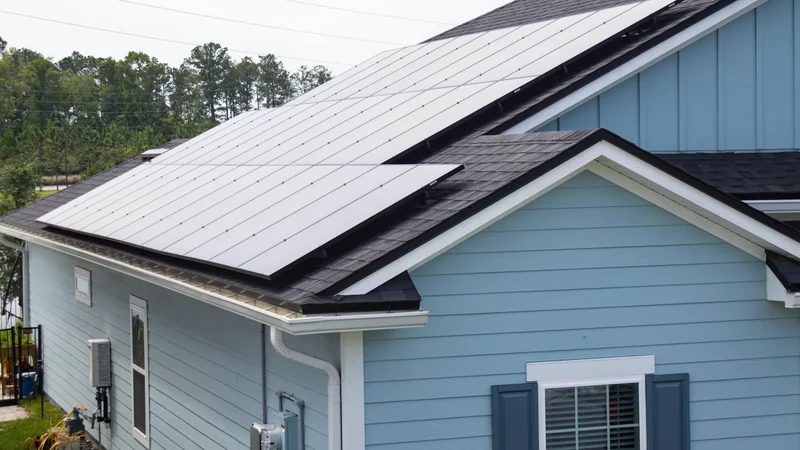
New federal tariffs on imported solar panels take effect on December 4, 2026. They set a minimum price of $0.38 per watt on imported panels and add a 15% tariff on top of that. Panel prices are already climbing ahead of the deadline.
If you’ve been thinking about solar, here’s what’s changing, what it actually does to your price, and whether it makes sense to move now. The short version: it costs less than the headlines suggest, but solar panel prices are going up.
What’s changing on December 4
The new rules, known as the Section 232 solar tariffs, do two things to imported panels (read the proclamation):
- A price floor of $0.38 per watt. Panels can’t come into the country for less. If an importer brings them in cheaper, they pay the difference as a duty.
- A 15% tariff on top of that, with lower rates for a few close trading partners.
Both stack on top of the duties already in place on panels from Southeast Asia. We’ve covered solar tariffs before, but most of those targeted specific countries or brands. This one covers imported panels from just about everywhere.
Why a $0.38/W floor is a big deal
For the last few years, we’ve been able to buy panels from our distributors for roughly $0.30–$0.40 per watt. That’s after the panels have passed through a few hands: the manufacturer, its U.S. import arm, a distributor, and then us. Everyone along the way adds a margin.
The new floor is $0.38 per watt at the border, before anyone’s markup and before the 15% tariff. You can see where this is going.
Our distributors expect pricing to settle around $0.50 per watt, and independent analysts land in the same neighborhood. Bernreuter Research expects U.S. panel prices of $0.44–$0.57 per watt.
Panel prices are already moving
You don’t have to wait until December to see it:
- Procurement platform Anza expects imported panels to rise from about $0.27 to $0.38 per watt, an increase of about 40%.
- Our own distributors have already started raising their prices.
- U.S.-made panels aren’t an escape hatch. Most American factories assemble panels from imported solar cells, and those cells are covered too. Anza estimates those panels going from about $0.30 to $0.43 per watt.
Why not stock up before the deadline?
We wish! A temporary rule, in place through December 3, cuts off importers whose shipments jump well above their normal volume. New import companies are capped at 55 panels a week, roughly enough for a couple of homes (Stoel Rives has a good summary).
Distributors can still sell what’s already in the country. But once that pre-tariff stock is gone, it’s gone.
What this means for your solar project cost
Here’s the good news: panels are one of the cheapest parts of a solar installation, at about 12% of the total. We break the rest down in our guide to solar costs in Virginia. Labor, inverters, racking, design, permits and interconnection make up most of what you pay.
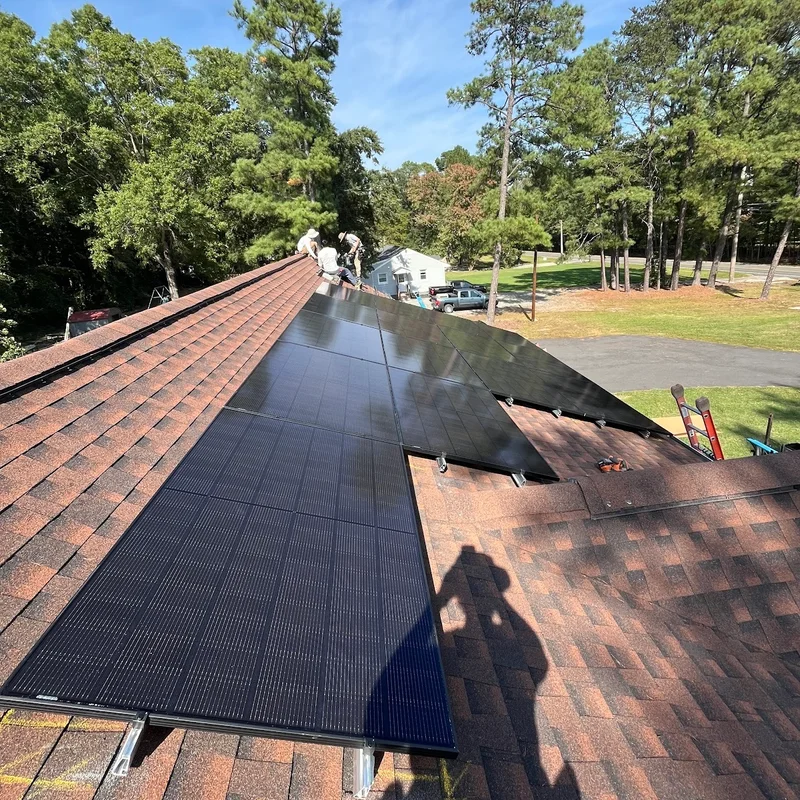
So a big jump in panel prices turns into a much smaller jump in your system price. Take a typical 10 kW system in Central Virginia, which runs about $25,000 to $30,000:
| If panels go up by… | Added cost (10 kW) | Change in total price |
|---|---|---|
| $0.10 per watt | ~$1,000 | ~3–4% |
| $0.20 per watt | ~$2,000 | ~7–8% |
When you see “40% increase” in the news, that’s the panels alone, not your whole system.
What about leases and PPAs?
If you’re looking at a lease or PPA, the company that owns the system buys the same panels, so expect those rates to feel the increase too. The upside is that the owner can still claim the federal commercial tax credit, which homeowners who buy lost at the end of 2025. That helps cushion the blow. If you’d rather not buy a system outright, here’s how our TPO option works.
Is now the best time to go solar?
Well, you know how we’re going to vote on this one. There is still some time to get panels at a lower price, and some overstock will likely be around heading into 2027. We unfortunately don’t see panel prices trending down anytime soon.
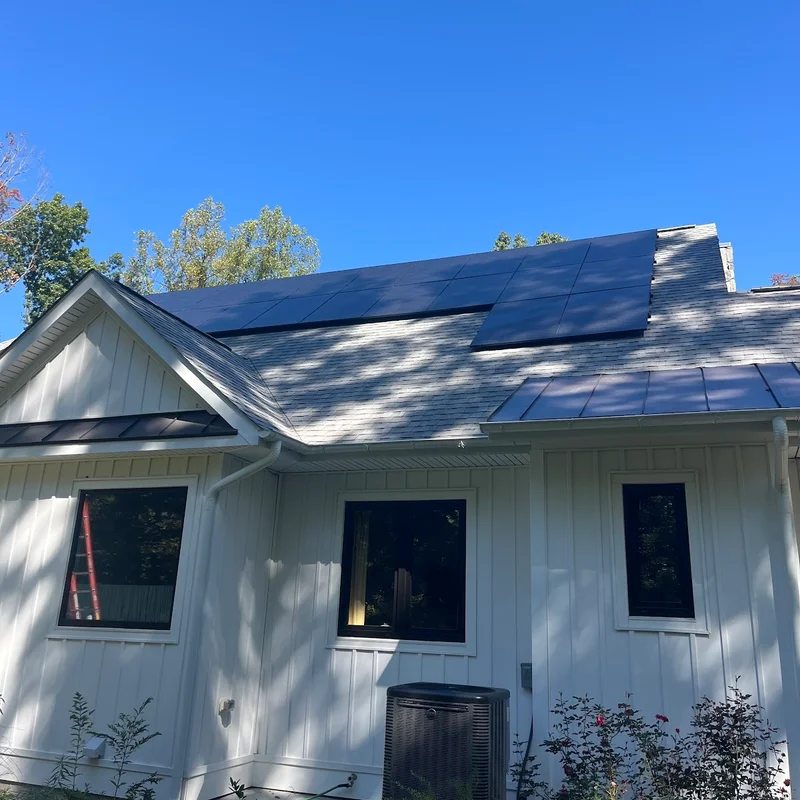
Why sooner is likely better:
- Panel costs are going up now, and the price floor has no set end date.
- Pre-tariff inventory is limited, and it’s not being restocked.
- Virginia electricity rates keep climbing, and every month you wait is another full-price utility bill.
What to keep in mind:
- Trade rules can change. And over the long run, analysts at Intertek CEA expect prices to drift back toward $0.30 per watt as U.S. factories ramp up (pv magazine). That’s likely many years away.
The bottom line: waiting is unlikely to save you money in the next year or two, and it will probably cost you some. A solid quote today is worth more than a guess about 2029.
Thinking about solar?
Every home is different, and so is every quote. If you’re in Virginia, get a free, no-pressure solar quote. We’ll tell you straight what your system costs today, how your price is protected, and whether buying or a lease makes more sense for you.
Sources:
- Adjusting Imports of Polysilicon and Its Derivatives Into the United States (The White House, August 2026)
- Section 232 Solar Tariffs Add New Price Floor on Modules: What Buyers Need to Know (Anza)
- Commerce’s Anti-Stockpiling Rule Imposes Limits on Pre-December 4 Polysilicon Imports (Stoel Rives)
- Section 232 tariffs push U.S. module prices to 2023 levels, but analysts see a path back to $0.30/W (pv magazine)
- US Section 232 solar import hurdles: Well meant, not well done (Bernreuter Research)
Related Posts

What are Solar Renewable Energy Credits (SRECs)?
Learn what Solar Renewable Energy Credits (SRECs) are, how to earn them, and how to make more money from your solar system.
How to Lock In 25 Years of Low Energy Rates in 2026
Learn how Virginia homeowners can lock in 25 years of predictable energy costs with solar in 2026—including $0-down options now available!
Dominion's Virtual Power Plant Is Coming to Virginia
Dominion's virtual power plant pilot is on track to start enrolling Virginia homes around late 2026. Here's how a VPP pays battery owners — and what's still unknown.